plantar fasciitis
Real answers about women's foot health — written in plain language, from a podiatrist's perspective.
Plantar fasciitis: what is it?
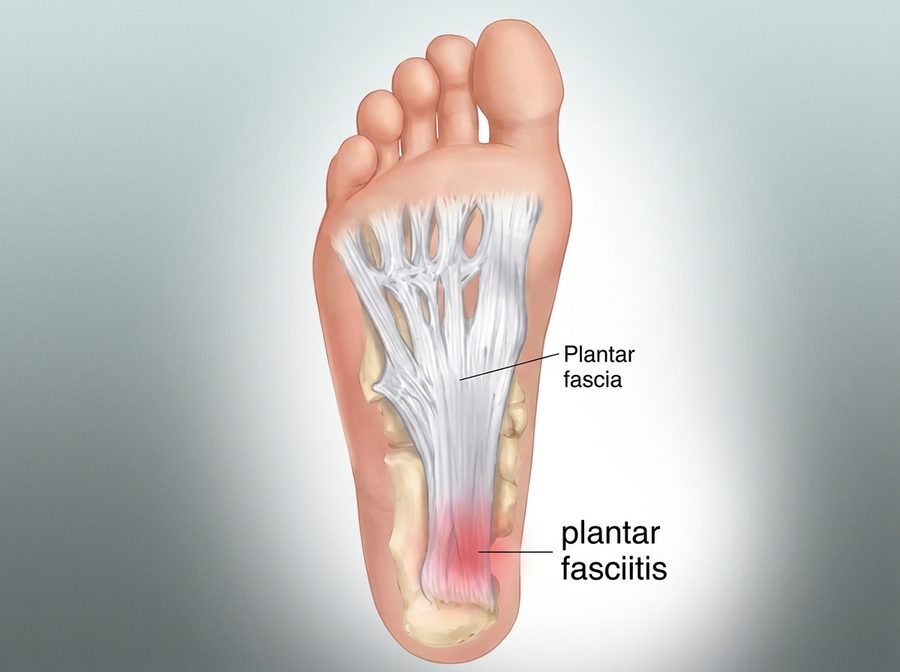
If your first steps out of bed in the morning bring a sharp, stabbing pain in your heel, you're in very familiar company. Plantar fasciitis is one of the most common causes of heel pain — and one of the most common reasons women finally decide to learn about their feet.
The plantar fascia is a thick band of tissue that runs along the bottom of your foot, connecting your heel to your toes and supporting your arch — a little like the string on an archer's bow. When it's asked to do more than it can handle, tiny irritations build up where it attaches to the heel, and it becomes painful.
The telltale signs:
- Heel pain with the first steps in the morning, or after sitting for a while, that often eases as you get moving
- Pain concentrated at the bottom of the heel, sometimes reaching into the arch
- Discomfort that returns after long periods of standing or after (not usually during) activity
Common contributors include time spent on hard floors, unsupportive or worn-out shoes, tight calf muscles, changes in activity or body weight (including pregnancy), and arches that are either quite low or quite high. It's especially common between the ages of 40 and 60.
The encouraging news: most cases improve without surgery, with patience and consistent care — which is exactly what the next two articles cover.
This is for educational purposes only and not medical advice. Always consult your podiatrist or healthcare provider before making decisions about products, shoes, or your foot health.
The best stretches for plantar fasciitis
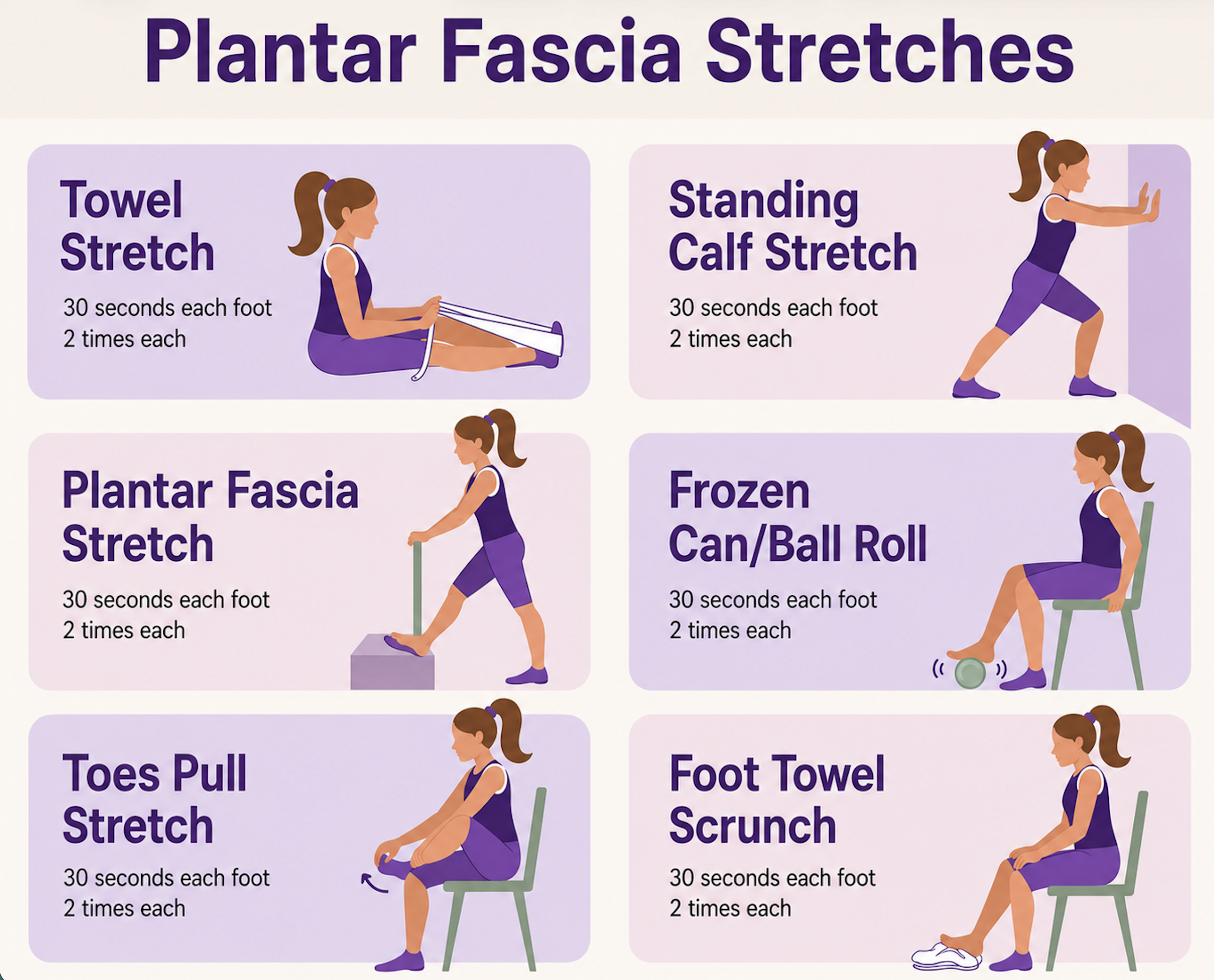 Download & Print Stretch Guide
Gentle, consistent stretching is one of the most helpful things you can do for plantar fasciitis — but when you stretch matters just as much as how. The best time is at night before bed, not first thing in the morning.
Stretching in the Morning? Warm Up First
After a night of rest, the tissues in your feet are cold and tight. Stretching cold, tight tissue is like bending a cold rubber band — it strains instead of lengthening, and it can aggravate the very spot you're trying to heal.
Instead, protect your feet in the morning:
- Before your very first step out of bed, put on a clog or shoe with good support. Keep it right at your bedside.
- Don't walk barefooted — especially those first steps of the day, and especially on hard floors.
- Once you've warmed up — after moving around for a while, or after a shower — then stretching is okay.
The golden rules: warm before you stretch, gentle beats forceful, nightly beats occasional, and a stretch should feel like a pull, never a sharp pain. If a stretch increases your pain, stop and mention it to your podiatrist.
This is for educational purposes only and not medical advice. Always consult your podiatrist or healthcare provider before making decisions about products, shoes, or your foot health.
Common treatments for plantar fasciitis

Most plantar fasciitis gets better without surgery — but rarely overnight. Improvement is usually measured in weeks and months of consistent care, and the plan typically builds from simple steps up.
The foundations (where almost everyone starts)
- Supportive shoes, worn consistently — cushioned heel, firm midsole, good arch contour. Going barefoot on hard floors, even at home, often keeps the irritation going.
- Insoles or orthotics — over-the-counter or custom, matched to your arch type, to take strain off the fascia.
- Daily stretching — see the stretches article above; this is the workhorse of recovery.
- Relative rest and ice — trading some high-impact activity for gentler movement, and icing the heel after long days.
See a podiatrist for evaluation
Heel and arch pain is not always plantar fasciitis — several other conditions can cause very similar symptoms, and the only way to know what you're truly dealing with is a proper evaluation. Your podiatrist may recommend diagnostics such as X-rays, ultrasound, or an MRI to confirm the diagnosis before treatment goes further.
From there, your podiatrist may discuss options such as night splints (which hold the foot in a gentle stretch while you sleep), physical therapy, taping or strapping, anti-inflammatory medication, injections, or other treatments that may include surgery when all else fails. Which of these fits you depends on your foot, your history, and your life — that's a conversation for your own provider.
This is for educational purposes only and not medical advice. Always consult your podiatrist or healthcare provider before making decisions about products, shoes, or your foot health.